Solar energy has become one of the fastest-growing sources of electricity in the United States. However, many people still aren’t sure what happens beyond the solar panels they see on rooftops. Large-scale solar farms are increasingly appearing across rural and suburban landscapes, generating clean energy for thousands of homes and businesses.
Yet questions remain about how these projects work, whether they are profitable, how much land they require, and what impact they have on local communities.
For landowners, farmers, and investors, the topic can be especially confusing. Some hear about lucrative land lease agreements without understanding the long-term commitments involved.
Others wonder whether solar farms help or hurt property values, local economies, and agricultural operations. At the same time, communities often debate the benefits of renewable energy against concerns about land use and visual impact.
Understanding the facts is important because solar farms play a growing role in America’s energy future. As technology improves and electricity demand continues to rise, utility-scale solar projects are becoming an increasingly common part of the energy landscape.
In this guide, we’ll explain what solar farms are, how they work, and how they differ from rooftop solar systems, with an expert’s perspective: Ryan Healy, Operations Manager at Convert Solar. We’ll also explore how solar farm owners generate revenue, typical project economics, the advantages and disadvantages of utility-scale solar, and some of the most common questions surrounding land use, profitability, and community impact.
Whether you’re considering leasing land, investing in renewable energy, or simply trying to understand the industry, this overview will help you make sense of one of the most important trends shaping modern energy production.
What is a solar farm?
According to Ryan Healy, “a solar farm is a large-scale solar energy installation designed to generate electricity for the power grid.”
Unlike residential solar systems that serve a single home, solar farms contain hundreds, thousands, or even millions of solar panels working together to produce electricity on a much larger scale.
“Most solar farms are built on open land where solar panels can receive maximum sunlight throughout the day. The electricity generated by the panels is collected, converted into usable alternating current (AC) through inverters, and transmitted to utility companies through the electrical grid.” – Ryan Healy.
Solar farms can vary significantly in size. Some community solar projects occupy only a few acres and serve local subscribers. In contrast, utility-scale solar farms may cover hundreds or even thousands of acres and produce enough electricity to power entire communities.
As demand for renewable energy grows, solar farms are becoming increasingly common throughout the United States. Many states are encouraging utility-scale solar development as part of broader efforts to diversify energy production and reduce dependence on fossil fuels.
What is the difference between a solar farm and rooftop solar?
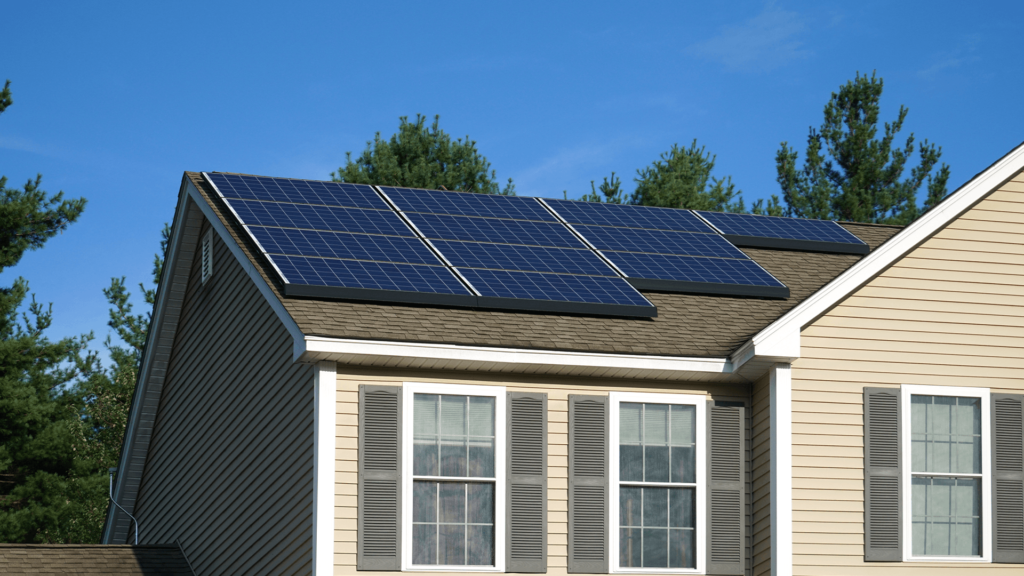
While both systems use photovoltaic (PV) technology to generate electricity from sunlight, their purpose, scale, and ownership structure are very different.
| Solar Farm | Rooftop Solar |
| Generates electricity for the utility grid | Generates electricity primarily for a home or business |
| Installed on open land | Installed on rooftops |
| Typically owned by utilities, investors, or solar developers | Typically owned by homeowners or businesses |
| Produces power for many customers | Produces power for a single property |
| Often spans dozens or hundreds of acres | Usually occupies available roof space |
| Requires utility interconnection agreements | Connects directly to the property’s electrical system |
One of the biggest differences is scale. A typical residential solar system may contain 15 to 40 panels, while a utility-scale solar farm may contain tens of thousands or even millions of panels.
Solar farms are also designed to maximize energy production rather than offset a single property’s electric bill. Their goal is to supply electricity to the broader grid, helping utilities meet growing energy demand.
For landowners in states such as Virginia, solar farms can also create opportunities to lease underutilized land to solar developers. In some cases, long-term lease agreements can provide a stable source of income while supporting renewable energy generation.
As solar adoption continues to grow across Virginia and the Mid-Atlantic region, understanding the differences between utility-scale solar farms and rooftop solar systems can help property owners determine which option aligns best with their goals.
How do solar farms work?
At their core, solar farms convert sunlight into electricity using photovoltaic (PV) panels. When sunlight strikes the solar cells, it generates direct current (DC) electricity. Inverters then convert that electricity into alternating current (AC), which is the type of power used by homes, businesses, and the electrical grid.
The process typically follows these steps:
- Solar panels capture sunlight.
- The panels generate DC electricity.
- Inverters convert DC power into AC power.
- Transformers adjust the voltage for transmission.
- The electricity is sent to the utility grid.
- Homes and businesses consume power through their local utility provider.
“Many modern solar farms also use tracking systems that allow panels to follow the sun throughout the day, increasing energy production compared to fixed-tilt installations.” – Ryan Healy.
The amount of electricity a solar farm produces depends on several factors, including:
- The size of the project
- Solar panel efficiency
- Geographic location
- Weather conditions
- System design
- Available sunlight hours
How do solar farm owners make money?
Solar farm owners generate revenue primarily by selling electricity.
Most utility-scale projects enter into long-term agreements known as Power Purchase Agreements (PPAs), where utilities, municipalities, corporations, or other large energy buyers agree to purchase electricity at predetermined rates.
Common revenue sources include:
- Electricity sales through PPAs
- Wholesale electricity market sales
- Renewable Energy Credits (RECs)
- Solar Renewable Energy Credits (SRECs) in certain states
- Government incentives and tax benefits
For example, a corporation seeking to meet sustainability goals may sign a 15- to 25-year agreement to purchase electricity from a solar farm, providing predictable revenue for the project’s owners.
According to the U.S. Department of Energy, long-term contracts and renewable energy incentives have played a major role in the growth of utility-scale solar projects across the country.
The profitability of a solar farm depends on several factors, including construction costs, financing terms, energy prices, available incentives, and ongoing maintenance expenses.
Can farmers lease land for solar farms?
Yes. Leasing land to a solar developer has become an increasingly popular option for farmers and rural landowners.
Rather than building and operating a solar farm themselves, many landowners enter into long-term lease agreements with solar development companies. The developer finances, constructs, owns, and operates the project, while the landowner receives lease payments.
Potential benefits for landowners include:
- Predictable long-term income
- Reduced dependence on crop prices
- Diversification of revenue streams
- Limited day-to-day operational responsibilities
Lease agreements often range from 20 to 40 years, depending on the project and local regulations.
Not every property is suitable for solar development. Developers typically evaluate factors such as:
- Available acreage
- Access to transmission infrastructure
- Local zoning regulations
- Solar exposure
- Environmental considerations
- Topography
Are solar farms profitable?
Solar farms can be highly profitable, but their success depends on factors such as project size, construction costs, financing, electricity prices, land expenses, and available incentives.
Several factors influence profitability:
- Solar resource availability
- Project size
- Land acquisition or lease costs
- Grid connection expenses
- Financing terms
- Maintenance requirements
- Electricity market prices
- Federal and state incentives
Many solar farm projects are designed with operational lifespans of 25 to 35 years, allowing developers to generate revenue long after the initial construction costs have been recovered.
According to the U.S. Energy Information Administration (EIA), utility-scale solar has become one of the fastest-growing sources of electricity generation in the United States due to declining technology costs and increasing demand for renewable energy.
How much electricity can a solar farm produce?
The amount of electricity a solar farm produces depends largely on its size and location.
A common benchmark used within the industry is that one megawatt (MW) of solar capacity can generate enough electricity annually to power approximately 150 to 300 homes, depending on local sunlight conditions and household energy consumption.
For example:
| Solar Farm Size | Approximate Annual Production |
| 1 MW | 1.5–2 million kWh |
| 10 MW | 15–20 million kWh |
| 50 MW | 75–100 million kWh |
| 100 MW | 150–200 million kWh |
Actual production varies based on:
- Geographic location
- Weather patterns
- Solar panel efficiency
- Tracking systems
- System maintenance
- Seasonal sunlight availability
Modern utility-scale solar farms often use single-axis tracking technology, which can increase energy production by allowing panels to follow the sun throughout the day.
How many homes can a solar farm power?
The answer depends on both the size of the solar farm and the amount of electricity consumed by local households.
As a general rule, a utility-scale solar project can power approximately 150 to 300 homes per megawatt (MW) of installed capacity.
Using that estimate:
| Solar Farm Size | Approximate Homes Powered |
| 1 MW | 150–300 homes |
| 10 MW | 1,500–3,000 homes |
| 50 MW | 7,500–15,000 homes |
| 100 MW | 15,000–30,000 homes |
To put that into perspective, many utility-scale projects being developed today range between 50 MW and 300 MW, making them capable of supplying electricity to tens of thousands of households.
It’s important to note that solar farms do not typically send electricity directly to specific homes. Instead, the power is delivered to the electrical grid, where it becomes part of the overall energy supply serving homes, businesses, schools, and public infrastructure.
Solar Farms Pros and Cons
Pros of Solar Farms
- Renewable Energy Production – Solar farms generate electricity without burning fossil fuels, helping reduce greenhouse gas emissions.
- Low Operating Costs – Once installed, solar farms typically have lower fuel and maintenance costs than many traditional power plants.
- Energy Independence – Increasing domestic energy production can reduce reliance on imported fuels.
- Landowner Income Opportunities – Farmers and rural property owners may earn predictable lease income by hosting solar projects.
- Job Creation – Solar development supports jobs in construction, engineering, maintenance, and operations.
- Scalability – Projects can range from small community solar installations to utility-scale facilities serving entire regions.
Cons of Solar Farms
- Large Land Requirements – Utility-scale projects can require hundreds or thousands of acres.
- Intermittent Energy Production – Solar panels only generate electricity when sunlight is available.
- Visual Impact Concerns – Some residents oppose projects because they change the appearance of rural landscapes.
- Upfront Construction Costs – Large-scale projects require substantial capital investment.
- Grid Infrastructure Challenges – Additional transmission and distribution upgrades may be necessary.
- Land Use Debates – Communities sometimes disagree about whether agricultural land should be converted to energy production.
If you live in Virginia, you’ve likely seen increased discussion around solar development in recent years as utilities, developers, and local governments balance renewable energy goals with agricultural and community interests.
Which Country Has the Largest Solar Farm?
As of recent global rankings, the world’s largest solar farm is the Golmud Wutumeiren Solar Park in China, with a capacity exceeding 3 gigawatts (GW).
China has become the global leader in utility-scale solar development, investing heavily in renewable energy infrastructure to meet growing electricity demand and reduce reliance on fossil fuels.
Other countries with some of the world’s largest solar farms include:
| Country | Notable Solar Project |
| China | Golmud Wutumeiren Solar Park |
| India | Bhadla Solar Park |
| United Arab Emirates | Al Dhafra Solar PV |
| United States | Solar Star and Copper Mountain Solar Facility |
| Egypt | Benban Solar Park |
According to the International Energy Agency (IEA), China accounts for a significant share of global solar capacity growth and continues to lead the world in new solar installations.
The rapid expansion of utility-scale solar around the world demonstrates how solar farms have evolved from niche energy projects into major contributors to national power grids.
Solar Farms Companies
A wide range of companies participate in the solar farm industry, including developers, engineering firms, utilities, equipment manufacturers, and independent power producers.
Some of the most recognized companies involved in utility-scale solar development include:
- NextEra Energy Resources
- First Solar
- Lightsource bp
- EDF Renewables North America
- Invenergy
- AES Clean Energy
These companies may perform one or more of the following roles:
- Identifying suitable land for development
- Securing permits and utility agreements
- Financing solar projects
- Designing and constructing solar farms
- Operating and maintaining facilities
- Selling electricity to utilities and commercial customers
For landowners interested in leasing property, working with an experienced and reputable solar developer is critical. Before signing any agreement, property owners should carefully review lease terms, project timelines, decommissioning requirements, and compensation structures.
FAQs
What permits are required to build a solar farm?
The permits required for a solar farm vary depending on the project’s size, location, and local regulations. Most utility-scale solar developments require multiple approvals before construction can begin.
Common requirements include:
- Land use or zoning approvals
- Conditional use permits or special use permits
- Building permits
- Electrical permits
- Environmental reviews
- Stormwater management permits
- Utility interconnection agreements
Large projects may also require coordination with state agencies, utility companies, and environmental regulators. Because permitting requirements can vary significantly between jurisdictions, developers typically conduct extensive due diligence before acquiring land or beginning construction.
What maintenance do solar farms require?
Solar farms generally require less maintenance than many traditional power generation facilities, but they are not maintenance-free.
Routine maintenance typically includes:
- Cleaning solar panels when necessary
- Vegetation management and mowing
- Monitoring system performance
- Inspecting electrical equipment
- Servicing inverters and transformers
- Repairing damaged components
- Maintaining security systems and fencing
Many utility-scale solar farms use remote monitoring systems that can detect performance issues in real time. This allows operators to identify underperforming equipment and schedule repairs before energy production is significantly affected.
Proper maintenance helps maximize energy output and extend the operational lifespan of the facility.
What types of solar panels are used in solar farms?
Most modern solar farms use monocrystalline or bifacial photovoltaic (PV) panels because they offer high efficiency and strong long-term performance.
Common panel types include:
- Monocrystalline Panels – Known for high efficiency and widespread use in utility-scale projects.
- Polycrystalline Panels – Less common today but still found in some installations.
- Bifacial Panels – Capture sunlight on both sides of the panel, increasing energy production under the right conditions.
- Thin-Film Panels – Used in certain specialized applications but less common in large utility-scale developments.
According to the U.S. Department of Energy, advances in panel technology continue to improve efficiency while reducing the cost of solar electricity generation.
Do solar farms require battery storage?
No, battery storage is not required for every solar farm.
Many solar farms simply generate electricity and send it directly to the grid during daylight hours. However, battery energy storage systems are becoming increasingly common because they help address the intermittent nature of solar energy.
Battery storage can provide several benefits:
- Store excess energy for later use
- Improve grid reliability
- Reduce curtailment losses
- Support peak demand periods
- Increase project flexibility
As battery technology continues to improve and costs decline, more developers are pairing utility-scale solar projects with energy storage systems.
Can solar farms coexist with agriculture (agrivoltaics)?
Yes. A growing practice known as agrivoltaics combines solar energy production with agricultural activities on the same land.
Examples include:
- Livestock grazing between solar panel rows
- Pollinator-friendly vegetation
- Crop production beneath elevated panels
- Beekeeping operations
According to the U.S. Department of Energy’s National Renewable Energy Laboratory (NREL), agrivoltaics can help landowners generate renewable energy while maintaining productive agricultural use of their property.
Potential benefits include:
- Additional farm revenue
- Reduced land-use conflicts
- Improved soil health
- Enhanced biodiversity
- Greater land-use efficiency
For farmers concerned about losing productive acreage, agrivoltaics may offer a way to balance energy generation with agricultural operations.
What incentives or government programs support solar farms?
Several federal, state, and utility-level programs help support solar farm development.
Common incentives include:
- Federal Investment Tax Credit (ITC)
- Accelerated depreciation through MACRS
- Renewable Energy Credits (RECs)
- State renewable energy programs
- Utility procurement programs
- Grants and financing initiatives
One of the most significant incentives in the United States is the Federal Investment Tax Credit, which can reduce the upfront cost of qualifying solar energy projects.
The availability and value of incentives can change over time as legislation and energy policies evolve. Developers typically work closely with tax professionals, attorneys, and financial advisors to maximize available benefits.
The Future of Energy and Your Next Move
Solar farms have become an increasingly important part of the global energy landscape. From powering thousands of homes to creating new revenue opportunities for landowners, utility-scale solar projects are helping meet growing electricity demand while supporting the transition toward cleaner energy sources.
In this guide, we’ve explored what solar farms are, how they work, and how they differ from rooftop solar systems. We also examined how solar farm owners generate revenue, the profitability of large-scale solar projects, electricity production capacity, land leasing opportunities for farmers, and the advantages and disadvantages that communities often consider when evaluating new developments.
Along the way, we discussed major solar companies, government incentives, permitting requirements, battery storage, and emerging practices such as agrivoltaics that allow solar energy production and agriculture to coexist on the same property.
Like any major infrastructure investment, solar farms come with both opportunities and challenges. Questions about land use, environmental impact, community planning, and long-term economics will continue to shape discussions as renewable energy expands. However, one thing is clear: solar energy is playing an increasingly significant role in how electricity is generated both in Virginia and across the United States.
For landowners, business owners, and homeowners interested in renewable energy, understanding the fundamentals of solar technology is the first step toward making informed decisions about future energy opportunities.
Learn more about the benefits of solar power and how solar energy can help reduce electricity costs while supporting long-term sustainability goals!
Whether you’re considering a rooftop system, evaluating a land lease opportunity, or simply exploring the future of renewable energy, a better understanding of solar farms can help you navigate one of the fastest-growing sectors in the modern energy industry.