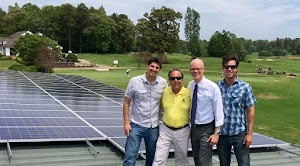
John Harrison, a homeowner in Suffolk, installed a 9.9 kW system that now offsets about 95% of his electricity use, with an estimated $55,390 in savings projected over 30 years. That’s a real, documented result. Before you can figure out what solar might do for your own home, it helps to understand the real cost of solar panels in Virginia right now, and why the math has changed since 2025.
How Much Do Solar Panels Cost in Virginia in 2026?
As of July 2026, the average installed cost of a residential solar system in Virginia is $2.65 per watt, according to EnergySage data. That figure includes equipment, permitting, and installation labor, before any applicable incentives.
| System Size | Estimated Installed Cost | Typical Fit |
| 6 kW | ~$14,800 | Smaller-usage households |
| 9 kW | ~$22,200 | Average-usage Virginia households |
| 12 kW | ~$29,600 | Higher-usage households |
These figures are based on EnergySage’s average installed price of $2.65 per watt for Virginia. Actual cost depends on your roof, equipment selection, and financing choice, and does not represent a quote. A properly sized system should be based on your home’s actual 12-month electricity usage rather than a table like this one.
What’s Changed Since 2025?
If you’ve read a solar cost guide recently and the cost of solar panels in Virginia looked more favorable than what’s above, it may be outdated. Three things changed for Virginia homeowners between 2025 and 2026:
- The federal 30% tax credit expired. The Residential Clean Energy Credit (Section 25D) ended for systems placed in service after December 31, 2025. It is no longer available, and any guide presenting it as a current discount is describing 2025 rules.
- Virginia’s Net Metering protections were reaffirmed. In April 2026, the State Corporation Commission ruled in Case No. PUR-2025-00079 to protect full retail-rate, 1:1 net metering for new residential customers, with a $1 per month administrative fee and a $0.05829 per kWh year-end surplus rate.
- HB 628 raised the state’s distributed solar carve-out, from 1% to 4.5% between 2026 and 2030, rising to 5% through 2045, a policy change that’s projected to increase SREC demand and pricing over the next several years.
Do Solar Tax Credits Still Exist in Virginia?
Not in the way many homeowners expect. The 30% federal residential credit expired on December 31, 2025, and Virginia does not have a separate statewide income tax credit for residential solar. This is a historical, no-longer-active benefit, mentioned here only so you understand why 2026 pricing looks different from older guides you may have seen. While incentives have changed, solar panel maintenance remains relatively minimal, making long-term ownership an attractive option for many Virginia homeowners.
What replaces it isn’t a credit, it’s two ongoing income and savings streams: Net Metering bill credits and SREC income, both explained below.
The Real Formula Behind the Cost of Solar Panels in Virginia
Without an upfront tax credit, the 2026 math for Virginia solar looks different than it did a year ago:
The gross cost of your system starts as the sticker price, but that number no longer shrinks the way it used to. There’s no federal tax credit to subtract anymore, since the 30% credit expired December 31, 2025.
What actually brings your cost down happens over time instead of upfront: Net Metering bill savings arrive every month, and SREC income arrives annually, as ongoing revenue rather than a one-time payout. Add those together over the life of your system, and you get a true cost of ownership that builds year by year.
The important shift: there’s no longer a single “net cost” number you subtract on day one. Instead, your system’s value builds over years through lower bills and SREC sales, which is why payback period, not a discounted sticker price, is now the more honest way to evaluate solar in Virginia.
How Do SRECs Work, and Do They Count as Income?
Solar Renewable Energy Certificates (SRECs) represent the environmental value of the electricity your system produces. You earn roughly one SREC for every 1,000 kWh generated, and these can be sold through a registered broker as ongoing income.
As of mid-2026, Virginia SRECs have traded in the $22.25 to $27.00 range on the spot market (Flett Exchange), with the state’s SREC alternative compliance payment ceiling at $78.82 and near-term projections toward $65 to $70 as HB 628’s higher carve-out requirement phases in.
Ownership of SRECs depends on how your system is financed. If you purchase your system, you typically retain the SREC rights, subject to registration terms. If you lease, SREC ownership follows the lease agreement and generally remains with the system owner. Neither structure is inherently better, as purchasing and leasing both offer unique advantages depending on your financial goals. If you’re working with a solar company in Chesapeake, VA, understanding how SREC ownership is handled can help you choose the financing option that best fits your long-term energy and savings objectives. In fact, roughly 60% of Convert Solar’s Virginia customers choose a lease.
What Affects Your Exact Cost?
The table above is a starting point. Your actual cost depends on:
- Household electricity usage — a properly sized system is based on your previous 12 months of usage.
- Roof condition and shading — orientation, pitch, and shading affect how much equipment your home needs.
- Financing choice — cash purchase, solar loan, or solar lease all change your upfront and monthly numbers differently.
- Battery storage, if added — Tesla Powerwall, Franklin Whole Home, or Enphase IQ Battery systems add to project cost but also add backup capability.
- Equipment selection — panel and inverter choice affect both price and expected performance.
How Long Is the Payback Period in Virginia?
There’s no single payback period that applies to every Virginia home because it depends on your system cost, electricity usage, financing, and Net Metering participation. Real-world results provide a better benchmark. For example, one residential Suffolk VA solar installation, John Harrison’s 9.9 kW system, is projected to save an estimated $55,390 over 30 years while achieving a 95% energy offset. Meanwhile, Glen Goodman’s 17.2 kW residential system in Virginia Beach reached a 103% energy offset. Your own payback period will depend on the same factors that produced these two documented outcomes.
Why Convert Solar’s Numbers Are Worth Trusting
Convert Solar has completed more than 8,500 installations across Virginia and has operated continuously in Hampton Roads for 14 years, which is part of why our figures for the cost of solar panels in Virginia are grounded in real completed projects rather than a national average.
The company has been recognized by Solar Power World as a Top Solar Contractor for six consecutive years (2021-2026), including a #22 Top Residential Solar Contractor and #25 Top Solar Installer ranking in the United States for 2026. These rankings are based on the previous year’s installed solar capacity, a reflection of consistent execution rather than customer votes or marketing campaigns.
Every Convert Solar proposal is:
- Built on your actual 12-month electricity usage
- Backed by a 25-year bumper-to-bumper warranty covering parts and workmanship
- Installed by an in-house crew, with permitting and utility interconnection handled entirely in-house
- Available with solar loan or solar lease financing (Convert Solar does not offer PPAs in Virginia)
Get Your Exact Cost of Solar Panels in Virginia
Stop guessing based on national averages. Request a no-obligation assessment, and we’ll size your exact return on investment to your home’s roof, usage, and shading.
Request Your No-Obligation Assessment →
Frequently Asked Questions
What is the cost of solar panels in Virginia?
As of July 2026, the average installed cost of residential solar in Virginia is $2.65 per watt, putting a typical 9 kW system at around $23,850 before any applicable incentives. Your actual cost depends on your electricity usage, roof characteristics, and financing choice. If you’re wondering are solar panels worth it in Virginia, the answer depends on your home’s energy consumption, available sunlight, and long-term savings potential rather than installation cost alone.
Do SRECs count as income?
Yes. SRECs are sold through a registered broker as ongoing income, generally on an annual basis, rather than a one-time credit. Virginia SRECs have traded between $22.25 and $27.00 on the spot market as of mid-2026.
Is the federal solar tax credit still available?
No. The federal Residential Clean Energy Credit expired for systems placed in service after December 31, 2025. Any guide describing a current 30% federal credit is out of date.
Does Virginia have its own state solar tax credit?
No. Virginia does not offer a statewide residential income tax credit for solar. Net Metering and SREC income are the two ongoing financial benefits available to Virginia homeowners in 2026.
How long is the payback period for solar in Virginia?
It depends on your system cost, usage, and financing. There is no single number that applies to every home; a personalized proposal based on your actual electricity usage is the only way to get an accurate estimate.
Should I buy or lease my solar system?
Both are valid choices depending on your financial goals. Purchasing typically means retaining SREC rights, while leasing offers a lower upfront cost with SREC ownership determined by the lease agreement. Convert Solar offers both options.
What affects my exact solar quote?
Your electricity usage, roof condition and shading, equipment selection, and financing choice all affect your final price. A drone roof assessment and a review of your 12-month usage history are used to build an accurate, individual proposal.