
Alternating current (AC) is a type of electrical current where the flow of electric charge changes direction periodically. This is the form of electricity delivered to homes and businesses through the power grid, making it the standard for most modern electrical systems.
Even though AC powers nearly everything around you, from appliances to lighting and solar systems, many homeowners don’t fully understand how it works or why it’s used instead of other types of current. That gap can make it harder to evaluate energy options, especially when comparing technologies like solar panels, inverters, and battery storage.
This guide breaks down alternating current in clear, practical terms. You’ll learn how AC works, the basic formulas behind it, how it compares to direct current (DC), and where it’s used in real-world applications. It also connects these concepts to solar energy systems, helping you better understand how electricity flows from generation to everyday use.
What is alternating current?
Alternating current is an electrical current that reverses direction at regular intervals. Instead of flowing in a single, constant direction, the current moves back and forth in a cycle. This change in direction allows electricity to travel efficiently over long distances and power a wide range of devices.
In practical terms, alternating current is what comes out of your wall outlets. It’s generated at power plants, transmitted through the grid, and delivered to homes and businesses in a form that can be easily adjusted using transformers.
What is AC voltage?
AC voltage is the electrical potential that drives alternating current through a circuit. Unlike steady voltage in direct current systems, AC voltage rises and falls in a repeating pattern, typically in a wave-like form.
This variation is what allows transformers to step the voltage up or down. High voltage is used for long-distance transmission to reduce energy loss, while lower voltage is delivered safely into homes for everyday use.
Mr. Jewel, from the channel EE Academy, explains the difference between alternating current and voltage:
“A voltage that changes its magnitude and reverses its direction in regular intervals across two terminals is known as alternating voltage… The current that changes its magnitude with time and reverses its direction in regular intervals due to the application of alternating voltage is known as alternating current.”
What is AC power?
AC power is the rate at which electrical energy is transferred in an alternating current system. It depends on both the voltage and the current, along with how they interact over time.
In AC systems, power isn’t always constant because voltage and current are continuously changing direction and magnitude. This is why concepts like real power, reactive power, and apparent power are used to describe how energy is actually consumed and delivered in electrical systems.
What is single-phase vs three-phase AC power?
Single-phase and three-phase refer to how alternating current is delivered.
Single-phase power is the most common type used in residential homes. It uses one alternating voltage cycle and is suitable for lighting, appliances, and general household use.
Three-phase power is typically used in commercial and industrial settings. It uses three synchronized voltage waves, which provide a more stable and efficient power flow. This setup supports larger equipment, motors, and systems that require consistent energy delivery.
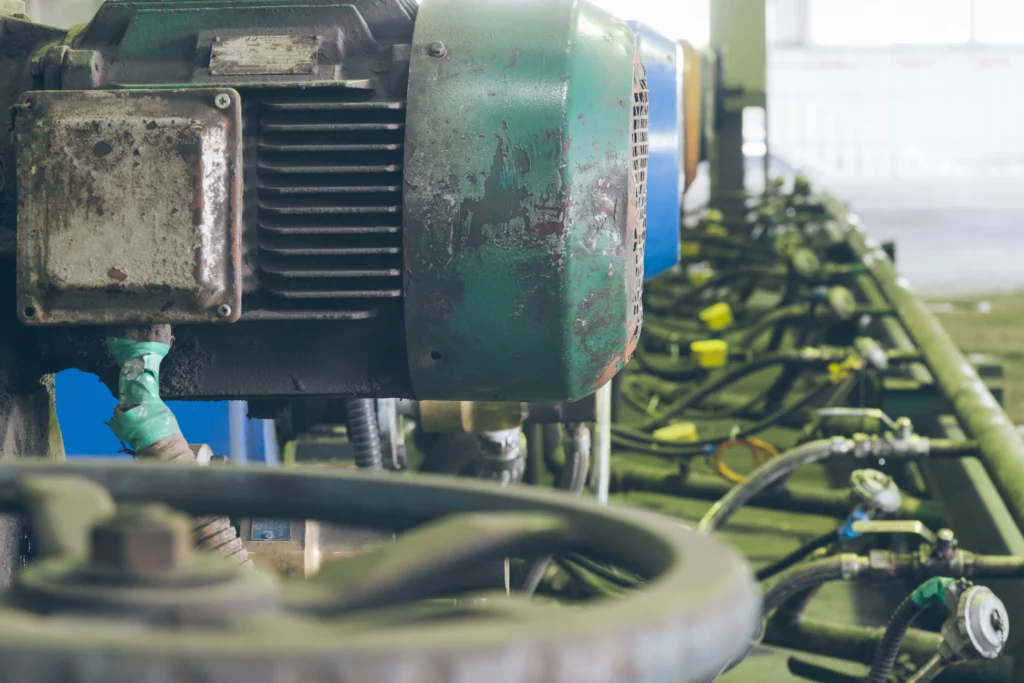
The main difference comes down to capacity and efficiency. Single-phase works well for typical home use, while three-phase is designed for higher demand and continuous operation.
How does alternating current work?
Alternating current works by continuously changing direction in a repeating cycle. This movement is typically represented as a sine wave, in which the current rises to a peak, drops to zero, reverses direction, and repeats the pattern.
Generators drive this cycle at power plants. As a coil rotates within a magnetic field, it produces a voltage that naturally alternates direction. That alternating voltage pushes electrons back and forth through power lines and into your home’s electrical system.
One key advantage of this behavior is the ease with which the AC voltage can be adjusted. Transformers increase voltage for long-distance transmission, which reduces energy loss, and then decrease it to safer levels before it reaches homes and businesses. This ability to step voltage up and down is a major reason AC is used in power distribution.
Difference between AC and DC?
The main difference between alternating current (AC) and direct current (DC) is how electricity flows.
- AC (alternating current) changes direction periodically
- DC (direct current) flows in one constant direction
Here is the DC’s definition according to Shawn Hymel, Electrical and Computer Engineer:
“Rather than oscillating back and forth, DC provides a constant voltage or current.”
AC is used for power distribution through the grid, while DC is commonly found in batteries, electronics, and solar panels.
Another key difference is how each type of current behaves in transmission and use:
- AC can be easily transformed to different voltage levels
- DC provides a steady, consistent flow of electricity
- AC is better suited for long-distance transmission
- DC is better for devices that require a stable voltage
Most homes use AC power, but many modern systems, including solar energy systems, also use DC power. Solar panels generate DC electricity, which is then converted into AC using an inverter so it can power your home.
Why do we use AC instead of DC?
AC is used instead of DC for power distribution mainly because it is more efficient to transmit over long distances. The ability to change voltage levels using transformers allows electricity to travel with less energy loss.
When electricity is transmitted at high voltage, the current is lower, which reduces heat loss in power lines. Before reaching homes, the voltage is stepped down to a safer level. This process is simple and cost-effective with AC systems.
DC can also be used for transmission, but it requires more complex and expensive equipment to change voltage levels. For this reason, AC became the standard for electrical grids.
In everyday use, AC also works well with a wide range of appliances and systems. While many devices internally convert AC to DC, the overall distribution system still relies on alternating current because of its flexibility and efficiency.
Can AC be converted to DC?
Yes, alternating current can be converted to direct current. This process is called rectification, and it’s done using a device known as a rectifier. In most modern systems, this function is built into power supplies, chargers, and inverters.
This conversion is essential because many electronic devices, including phones, laptops, and battery systems, operate on DC power. Even in solar energy systems, this process plays a key role. Solar panels generate DC electricity, which is often converted to AC for home use, and then sometimes converted back to DC for storage in batteries.
The ability to move between AC and DC allows different technologies to work together within the same electrical system.
Who invented AC current?
Alternating current as a concept developed over time, but it’s most closely associated with Nikola Tesla, who played a central role in developing practical AC power systems in the late 19th century.
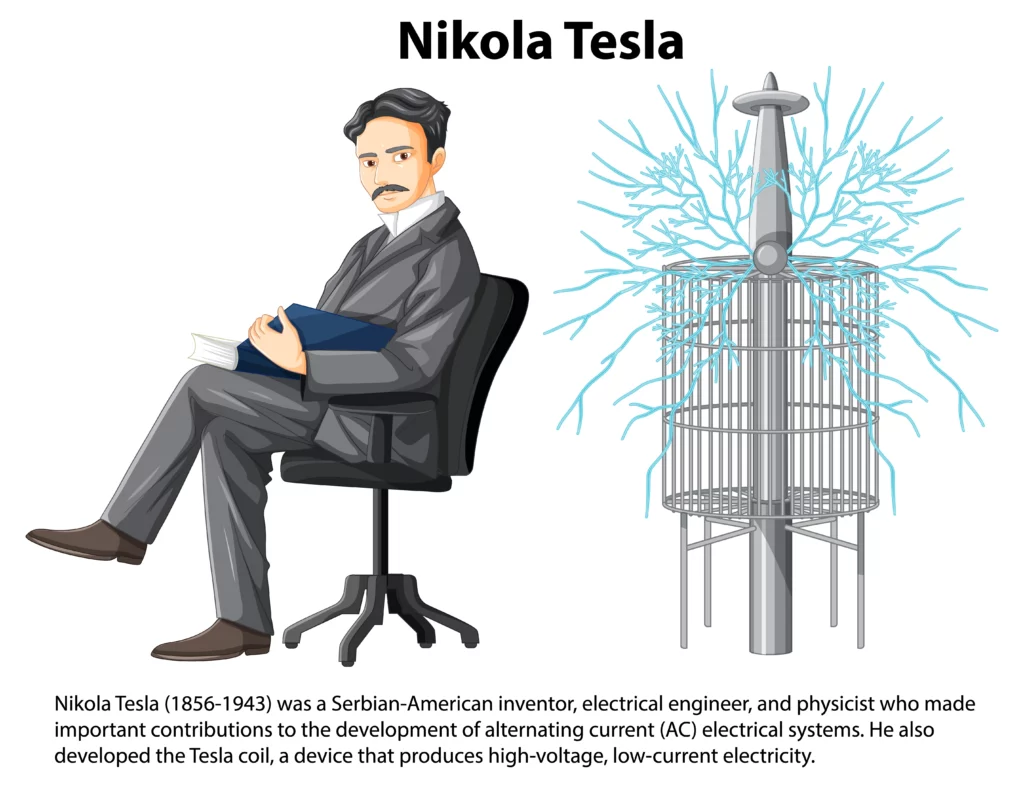
Tesla designed key components such as AC motors and transformers, enabling the efficient generation and distribution of electricity over long distances. His work was later supported and commercialized by George Westinghouse, who helped bring AC power systems into widespread use.
Their contributions were part of what became known as the War of Currents, a competition between AC and DC systems. AC ultimately became the standard due to its efficiency in power transmission.
What is alternating current used for?
Alternating current is used in nearly every part of modern electrical infrastructure. It powers homes, supports industrial operations, and enables large-scale energy distribution.
Common uses of alternating current include:
- Residential electricity
AC powers lighting, appliances, heating and cooling systems, and outlets in homes. - Commercial and industrial equipment
Factories, office buildings, and large facilities rely on AC, especially three-phase power, to run machinery and heavy equipment. - Power transmission and distribution
Utility companies use AC to move electricity over long distances from power plants to cities and neighborhoods. - Solar energy systems
In grid-tied solar setups, electricity must be converted into AC so it can be used in your home or sent back to the grid. - Public infrastructure
Street lighting, transportation systems, and public facilities all depend on AC power.
In simple terms, alternating current is the backbone of how electricity is delivered and used in everyday life.
Relating AC to solar energy
Understanding alternating current becomes especially useful when looking at how solar energy systems work in real homes.
Solar panels generate direct current (DC) electricity. That power can’t be used directly by most household appliances, which are designed to run on alternating current (AC). This is where the inverter comes in.
This connection between DC and AC also affects how energy moves through your system:
- During the day, your solar panels generate DC power, which is converted to AC and used in your home
- If you produce more than you use, excess AC electricity can be sent back to the grid (depending on local net metering policies)
- If you have a battery, energy may be stored as DC and converted again when needed
In grid-tied systems, AC is the common language between your home and the utility grid. Everything must match the grid’s voltage and frequency to work safely and efficiently.
Understanding this relationship helps when evaluating solar equipment, especially inverters, battery systems, and overall system design. It also clarifies why both AC and DC play a role in solar energy, even though your home ultimately runs on alternating current.
What is the frequency of AC power?
The frequency of alternating current refers to how many times the current changes direction in one second. It’s measured in hertz (Hz). One hertz equals one complete cycle per second.
In a typical AC waveform, the current rises, falls, reverses direction, and returns to its starting point. That full movement is one cycle. So, a frequency of 60 Hz means the current completes 60 cycles every second.
Frequency is a critical part of how electrical systems operate. Power plants, the grid, and your home’s electrical system all need to stay synchronized at the same frequency. This ensures that appliances run smoothly, motors operate correctly, and power is delivered consistently.
What is the difference between 50 Hz and 60 Hz AC?
The difference between 50 Hz and 60 Hz comes down to how fast the electrical current cycles.
- 50 Hz means 50 cycles per second
- 60 Hz means 60 cycles per second
Yes, a higher frequency means the current changes direction more frequently. So, 60 Hz is “faster” than 50 Hz in terms of how quickly the electrical cycle repeats.
In practical terms, this affects how certain equipment operates:
- Motors tend to run slightly faster on 60 Hz than on 50 Hz
- Transformers and power systems are designed specifically for one frequency
- Timing-based devices (like older clocks) rely on frequency to keep accurate time
Different regions use different standards. For example, the United States uses 60 Hz, while many countries in Europe, Asia, and Africa use 50 Hz.
For most modern electronics, the difference doesn’t create issues because power supplies are designed to handle both. But for equipment with motors or frequency-dependent components, using the correct frequency is important for performance and longevity.
Alternating current formula (voltage, current, frequency)
Alternating current is described using formulas that show how voltage and current change over time. Because AC follows a repeating wave pattern, these formulas help explain what’s happening inside wires, appliances, and power systems.
Voltage formula (with example)
- v(t) = Vmax × sin(ωt)
- ω = 2πf
Where:
- Vmax is the peak voltage
- f is the frequency (Hz)
- t is time
Example:
If your system has a peak voltage of 170V and operates at 60 Hz:
- ω = 2π × 60 = 377 rad/s
- v(t) = 170 × sin(377t)
At a specific moment, say t = 0.005 seconds:
- v(0.005) = 170 × sin(377 × 0.005)
- v(0.005) ≈ 170 × sin(1.885) ≈ 170 × 0.95 ≈ 161.5V
This shows how voltage changes at a specific point in time, rather than staying constant.
Current formula (with example)
- i(t) = Imax × sin(ωt)
Where:
- Imax is the peak current
Example:
If a circuit has a peak current of 10 amps at 60 Hz:
- i(t) = 10 × sin(377t)
At t = 0.005 seconds:
- i(0.005) = 10 × sin(1.885) ≈ 10 × 0.95 ≈ 9.5A
This shows how current rises and falls in the same wave pattern as voltage.
RMS values (with example)
RMS values represent the effective voltage and current used in real systems.
- Vrms = Vmax / √2
- Irms = Imax / √2
Example (voltage):
- Vmax = 170V
- Vrms = 170 / √2 ≈ 170 / 1.414 ≈ 120V
This is why standard household outlets are rated at 120V, even though the peak voltage is higher.
Example (current):
- Imax = 10A
- Irms = 10 / √2 ≈ 7.07A
RMS values are what you use when calculating power consumption and system performance.
Frequency relationship (with example)
- f = 1 / T
Where:
- f is frequency (Hz)
- T is the period (time for one full cycle)
Example:
If one AC cycle takes 0.0167 seconds:
- f = 1 / 0.0167 ≈ 60 Hz
This matches the standard frequency used in many residential electrical systems.
These examples show how voltage, current, and frequency work together in a predictable cycle. While the math helps describe the behavior, the practical takeaway is that AC power is constantly changing, and those changes are what allow electricity to be generated, transmitted, and used efficiently.
FAQs
How is alternating current generated?
Alternating current is generated using a device called an alternator. Inside the generator, a coil rotates within a magnetic field, which creates a voltage that naturally changes direction as it spins.
This process happens in power plants, whether they are powered by fossil fuels, nuclear energy, hydroelectric systems, or wind turbines. In all cases, mechanical energy is converted into electrical energy in the form of AC.
Why is AC better for long-distance power transmission?
AC is more efficient for long-distance transmission because its voltage can be easily increased and decreased using transformers.
High voltage allows electricity to travel with a lower current, which reduces energy loss as heat in power lines. Before reaching homes and businesses, the voltage is stepped down to safer levels.
This ability to adjust voltage efficiently is one of the main reasons AC is used in electrical grids.
What are the advantages of alternating current?
Alternating current offers several practical advantages:
- Efficient transmission over long distances
- Easy voltage conversion using transformers
- Widely compatible with electrical infrastructure
- Supports both residential and industrial use
- Works well with large-scale power generation systems
These advantages make AC the standard for power distribution worldwide.
What are the disadvantages of AC power?
While AC is widely used, it also has limitations:
- More complex behavior due to constantly changing voltage and current
- Energy losses in certain components, especially in reactive systems
- Requires conversion for many electronic devices, which operate on DC
- Can be more hazardous at high voltages
These drawbacks are usually managed through system design and protective equipment.
How does AC power affect electrical appliances?
Most household appliances are designed to run on AC power directly. Devices like refrigerators, air conditioners, and lighting systems are built to operate efficiently with alternating current.
However, many modern electronics, such as laptops and TVs, internally convert AC to DC using power supplies. This allows them to maintain stable operation even though the incoming power is constantly changing.
Is alternating current dangerous?
Yes, alternating current can be dangerous, especially at higher voltages. Because it changes direction rapidly, it can interfere with the body’s electrical signals and cause muscle contractions or more serious injuries.
The level of risk depends on voltage, current, and exposure time. Household electricity is generally safe when used correctly, but direct contact with live wires can be harmful.
What safety precautions are needed when working with AC?
Working with AC requires proper safety measures:
- Turn off the power at the breaker before working on circuits
- Use insulated tools and protective equipment
- Avoid contact with exposed wires
- Follow local electrical codes and guidelines
- Hire a licensed professional for complex work
These precautions help reduce the risk of shock, injury, and damage to electrical systems.
Conclusion
Alternating current is the foundation of how electricity is delivered and used every day. It flows differently from direct current, changes direction in a continuous cycle, and allows power to be transmitted efficiently over long distances. Understanding how AC works, from voltage and frequency to real-world applications, helps make sense of everything from household electricity to solar panel installation in Virginia and large-scale power systems.
We also covered how AC connects directly to solar energy. While solar panels generate DC electricity, systems rely on inverters to convert that energy into AC so it can power your home and integrate with the grid.
If you want to see how this works in a real installation, take a look at this solar project featuring an installed inverter and how AC power is integrated into a complete system.