
A battery is a device that stores energy in chemical form and releases it as electricity when needed. Inside, chemical reactions create a flow of electrons that power everything from phones and cars to solar systems and home appliances. In simple terms, a battery holds energy, converts it into electrical power, and delivers it on demand.
For most people, batteries are part of daily life, but they’re rarely something you think about until there’s a problem. A phone that won’t hold a charge, a car that won’t start, a solar system that stops supplying power at night, or a device that suddenly dies without warning.
Choosing the wrong battery type, misunderstanding how charging works, or not understanding how different batteries are constructed and used for battery storage often leads to wasted money, poor performance, and a shortened lifespan.
This guide breaks it down clearly. You’ll learn what a battery is, how it stores and converts energy, the main battery types (including alkaline, lithium-ion, lead-acid, AGM, and rechargeable options), and which ones make sense for different uses, from everyday electronics to solar energy systems and electric vehicles.
The goal is simple: help you understand batteries well enough to make better decisions, not just buy replacements when something stops working.
What is a battery?
A battery is a self-contained power source that stores energy chemically and delivers it as electricity when a device needs it. It doesn’t create energy. It holds energy in a stable form and converts it into electrical current through controlled chemical reactions.
At a basic level, every battery has three core parts:
- Anode (negative electrode)
- Cathode (positive electrode)
- Electrolyte (the medium that allows ions to move between them)
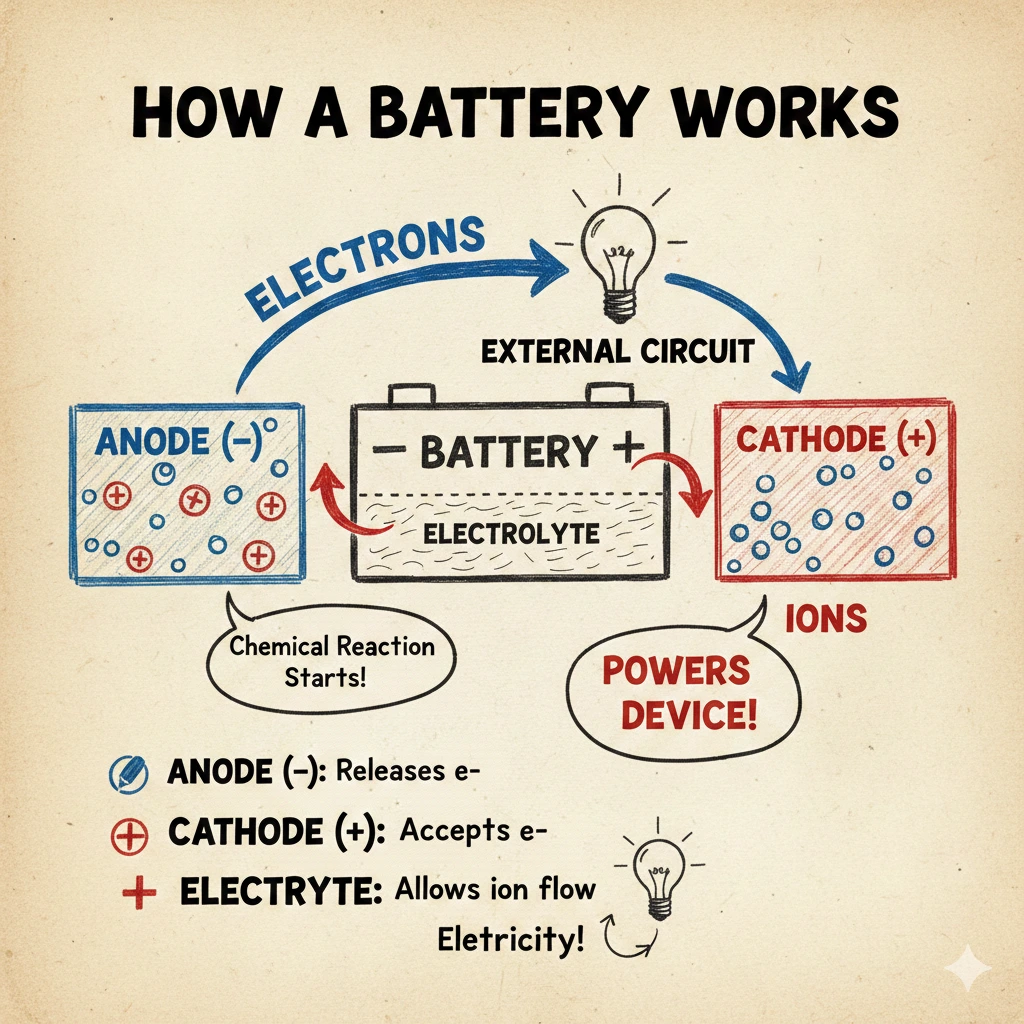
When a device is turned on, a chemical reaction starts inside the battery. Electrons flow from the anode to the cathode through the external circuit, creating electricity that powers the device. Inside the battery, ions move through the electrolyte to balance that flow. This internal and external movement is what makes usable energy possible.
Batteries exist in many forms because different applications require different performance characteristics. A battery-powered car system requires high power output and long cycle life. A key fob battery prioritizes low drain and long shelf life. A solar battery must store large amounts of energy safely for daily charge and discharge cycles.
The battery inventor and early development
The first true battery was created in 1800 by Alessandro Volta, an Italian physicist who developed the voltaic pile. It used stacked discs of different metals and a salt solution to produce a continuous flow of electric current for the first time in history. This invention proved that electricity could be generated chemically, not just through static or mechanical means.
That discovery shaped everything that followed, from small household batteries to large-scale energy storage systems used in electric vehicles and solar power.
From here, the real question becomes practical: how does that chemical process actually work inside modern batteries, and what changes between one type and another?
How it works
A battery works by converting stored chemical energy into electrical energy through a controlled internal reaction. This process begins the moment a device draws power.
Inside the battery, two different materials react chemically. One releases electrons, and the other receives them. The electrolyte allows ions to move between these materials but prevents electrons from flowing directly inside the battery. Because of that separation, electrons are forced to travel through the external circuit, which is the device being powered. That movement of electrons is electricity.
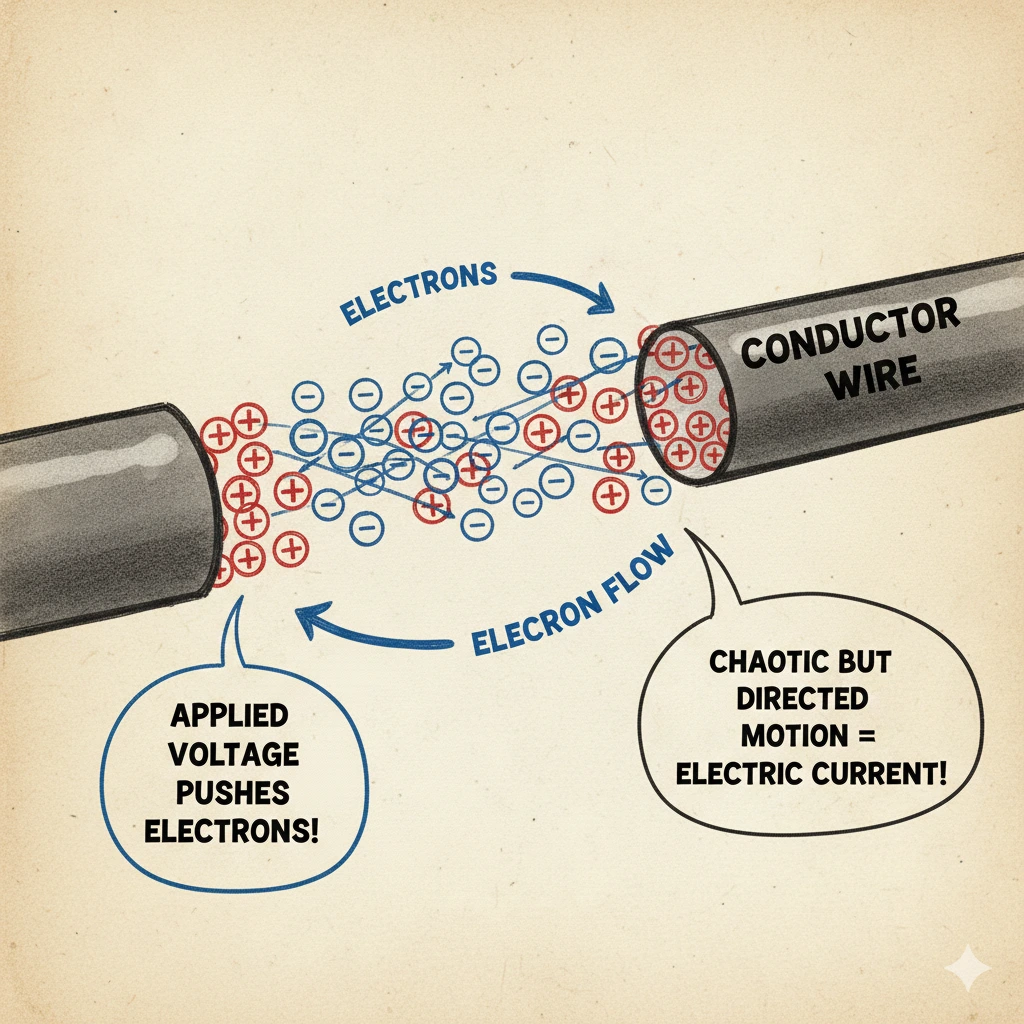
In simple terms:
- Chemical energy creates an imbalance of charge
- Electrons flow through the device to restore balance
- That flow becomes usable electrical power
- The reaction continues as long as stored energy remains
The same core process happens in every battery, regardless of size or purpose. A phone battery, a car battery, and a solar battery all rely on this same principle. What changes between them is not the physics, but the materials, structure, and design that control how much energy is stored, how fast it moves, and how safely it’s delivered.
That’s where battery types start to matter. Different chemistries are built for different demands, and those differences shape performance, lifespan, cost, and safety. The next section breaks down the main battery types and what each one is designed to do.
Battery types
Not all batteries are built for the same purpose. Even when they rely on the same basic chemical principles, different materials create very different performance profiles. Some are designed for low-drain devices, others for high power output, and others for long-term energy storage. Capacity, lifespan, rechargeability, cost, and safety all change depending on the chemistry used.
This is why battery types matter. The chemistry inside the battery determines where it works well and where it fails. Some types are ideal for everyday household electronics, others for medical devices, transportation, or energy storage. Understanding these categories makes it easier to choose a battery that fits the job instead of forcing a generic solution into the wrong use case.
Zinc-based batteries

Zinc-based batteries are among the oldest and most widely used battery chemistries. They use zinc as the primary anode material and are designed primarily for low- to moderate-power applications.
Their main advantages are low cost, chemical stability, and reliable performance in simple, everyday devices.
These batteries are not built for high-drain systems or repeated recharging. Still, they remain essential in daily life because they are accessible, safe to handle, and widely compatible with common electronics.
There are several zinc-based variations, each designed for specific everyday uses:
- Zinc-Carbon (Leclanché), common in basic household batteries for clocks, remotes, flashlights, and simple toys
- Zinc-Chloride, used in medium-drain devices like radios and portable electronics
- Zinc-Air, found in hearing aids and medical devices, where small size and long runtime matter
- Zinc-Mercury (Mercury Cell), now mostly discontinued due to environmental risks
- Zinc-Silver Oxide, used in watches, calculators, medical instruments, and precision electronics
Together, these types show how one base material can support many different applications. Zinc-based batteries form the foundation of everyday portable power, serving devices that require steady, predictable energy rather than high output or long-term energy storage.
Alkaline batteries

Alkaline batteries are one of the most common battery types in daily use. They are zinc-based but use an alkaline electrolyte, which allows for higher energy capacity, longer shelf life, and more stable performance than traditional zinc-carbon batteries. This makes them a standard choice for everyday household electronics that need reliable, consistent power without the complexity of recharging.
They are designed for low to moderate drain devices and are widely available in common sizes like AA, AAA, C, D, and 9V. Their balance of cost, performance, and availability is why they remain the default battery option in most homes.
Common alkaline battery formats and uses include:
- Standard alkaline cells, used in TV remotes, wall clocks, wireless keyboards, toys, and flashlights
- High-drain alkaline variants, designed for devices like digital cameras, game controllers, and handheld electronics
- Industrial alkaline batteries are used in professional equipment, sensors, and monitoring devices
- Long-life alkaline batteries, built for smoke detectors and emergency devices that require extended shelf stability
Alkaline batteries sit between basic zinc batteries and advanced lithium technologies. They offer better performance and longevity than older zinc-carbon cells, while remaining simple, affordable, and practical for everyday household use.
Lithium primary batteries
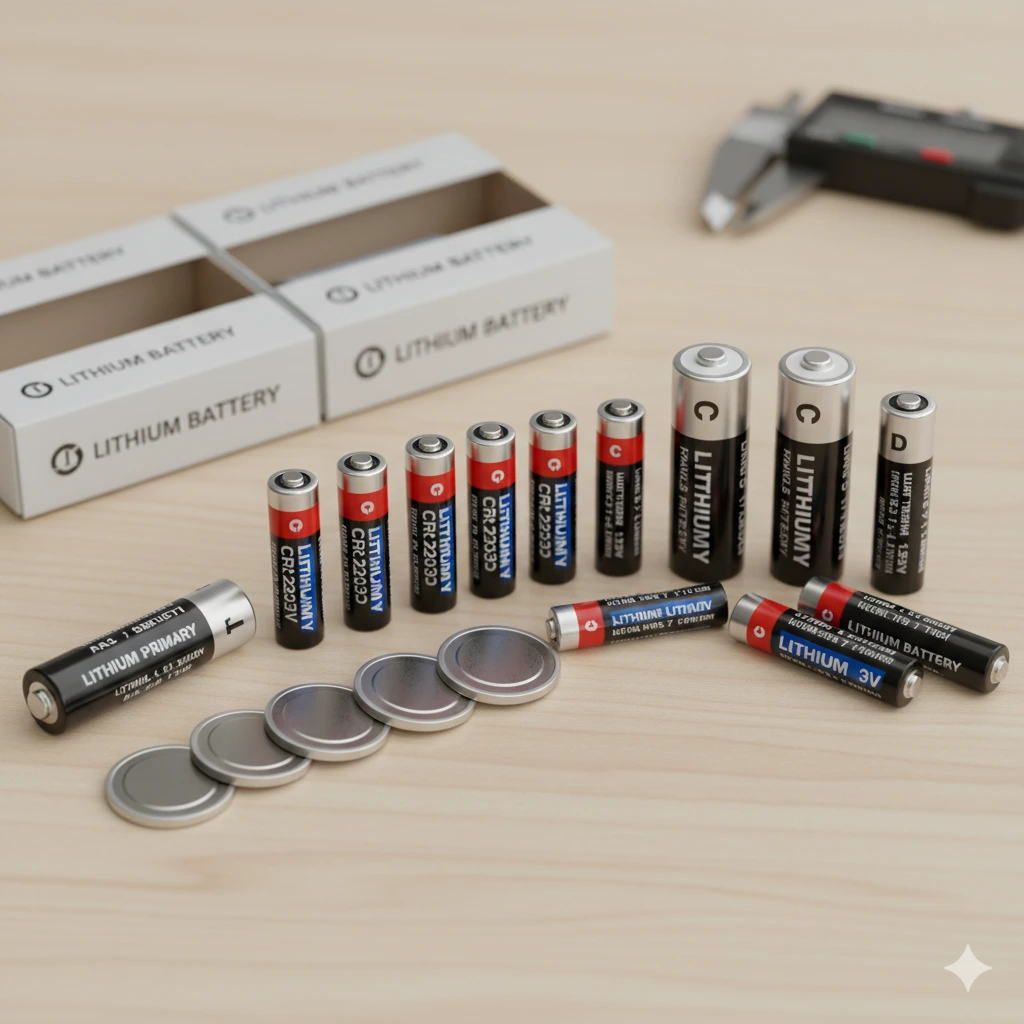
Lithium primary batteries are non-rechargeable lithium-based batteries designed for long life, high energy density, and stable performance across a wide range of temperatures.
Unlike rechargeable lithium-ion systems, these batteries are built for reliability and longevity rather than repeated charge cycles. They are commonly used in devices where long shelf life, low self-discharge, and dependable power matter more than recharging convenience.
They perform well in both low-drain and high-demand environments and are widely used in consumer electronics, industrial equipment, medical devices, and safety systems.
Common lithium primary battery types and everyday uses include:
- Lithium-Iron Disulfide (Li-FeS₂), often found in AA and AAA formats for cameras, high-drain electronics, flashlights, and smart home devices
- Lithium-Manganese Dioxide (Li-MnO₂), commonly used in coin cells and cylindrical batteries for key fobs, watches, calculators, medical devices, and sensors
- Lithium-Thionyl Chloride (Li-SOCl₂), used in industrial equipment, meters, alarms, and remote monitoring systems that require long-term, low-drain power
- Lithium-Sulfur Dioxide (Li-SO₂), applied in military, industrial, and emergency equipment, where stable voltage and reliability are critical
- Lithium-Carbon Monofluoride (Li-CFx), used in medical devices, backup power systems, and precision electronics that require a very long shelf life and stable output
Lithium primary batteries are chosen when reliability matters more than rechargeability. They support devices that must work consistently over long periods, often in environments where changing batteries frequently is impractical or impossible.
Secondary batteries
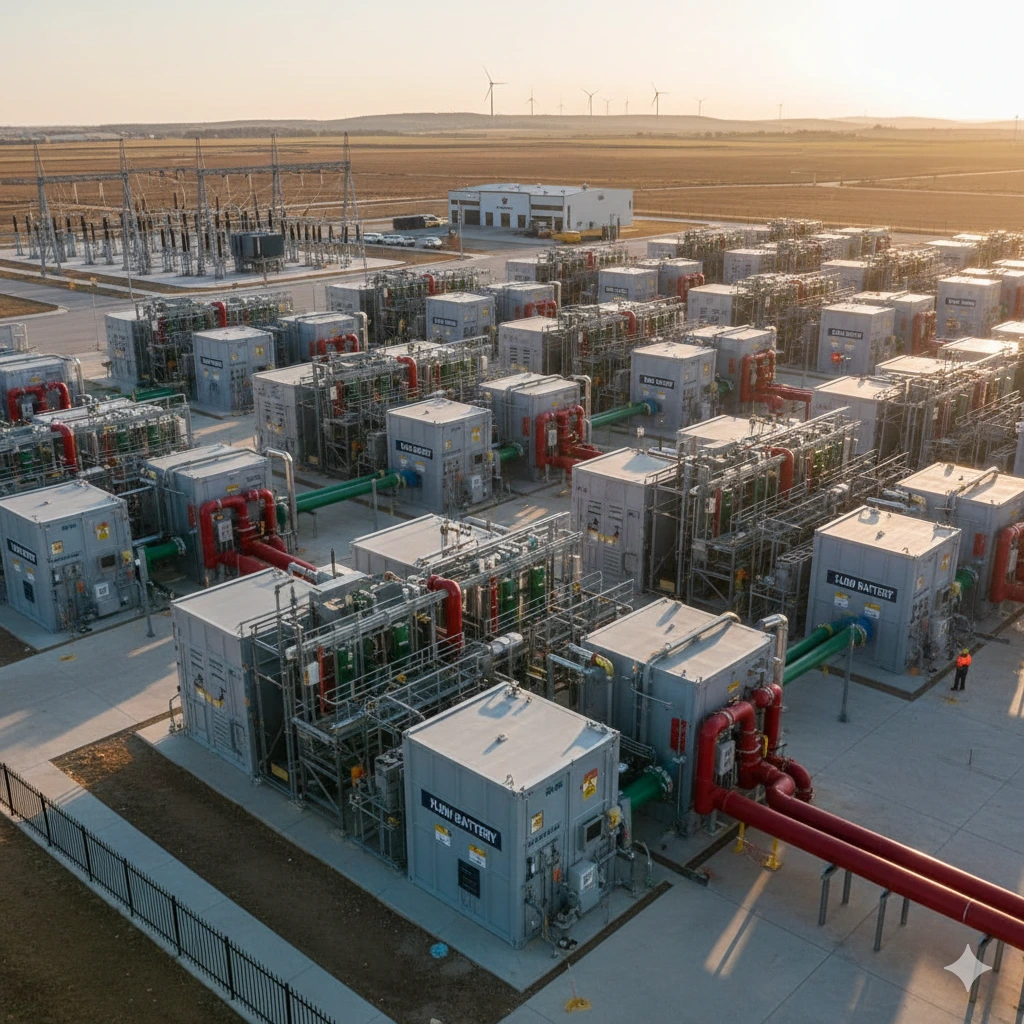
Secondary batteries are systems designed to store energy, deliver it, and then be restored through charging. Instead of being discarded after one use, they support repeated charge and discharge cycles, making them essential for modern electronics, transportation, and energy storage.
These batteries are built for long-term use, cost efficiency over time, and sustained performance. They power everything from phones and laptops to electric vehicles, home energy storage systems, and backup power solutions.
Major categories of rechargeable batteries include:
- Lead-based batteries, commonly used in car batteries, backup power systems, and large-scale energy storage
- Nickel-based batteries, found in older rechargeable electronics, tools, and some medical devices
- Lithium-ion family, used in smartphones, laptops, electric vehicles, battery storage systems, and portable electronics
- Sodium-based batteries, emerging in grid storage and large-scale energy applications
- Flow batteries are used in utility-scale and commercial energy storage, where long-duration discharge is needed
Rechargeable batteries form the backbone of modern energy systems. They enable mobility, renewable energy storage, and reliable backup power across residential, commercial, and industrial environments.
Advanced battery types
For readers who want to explore beyond mainstream technologies, research and development continues to expand battery innovation into new materials and structures. These technologies aim to improve safety, energy density, sustainability, lifespan, and scalability.
Notable advanced battery concepts include:
- Solid-state batteries
- Thin-film batteries
- Structural batteries
- Paper batteries
- Graphene batteries
- Aluminum-air batteries
- Magnesium-ion batteries
- Calcium-ion batteries
- Potassium-ion batteries
- Silicon-anode batteries
- Dual-ion batteries
- Hybrid supercapacitor batteries
These technologies are at different stages of development, from early research to limited commercial use. Together, they show how battery innovation continues to evolve beyond traditional chemistries to meet future energy demands in transportation, electronics, and renewable energy systems.
Emerging technologies
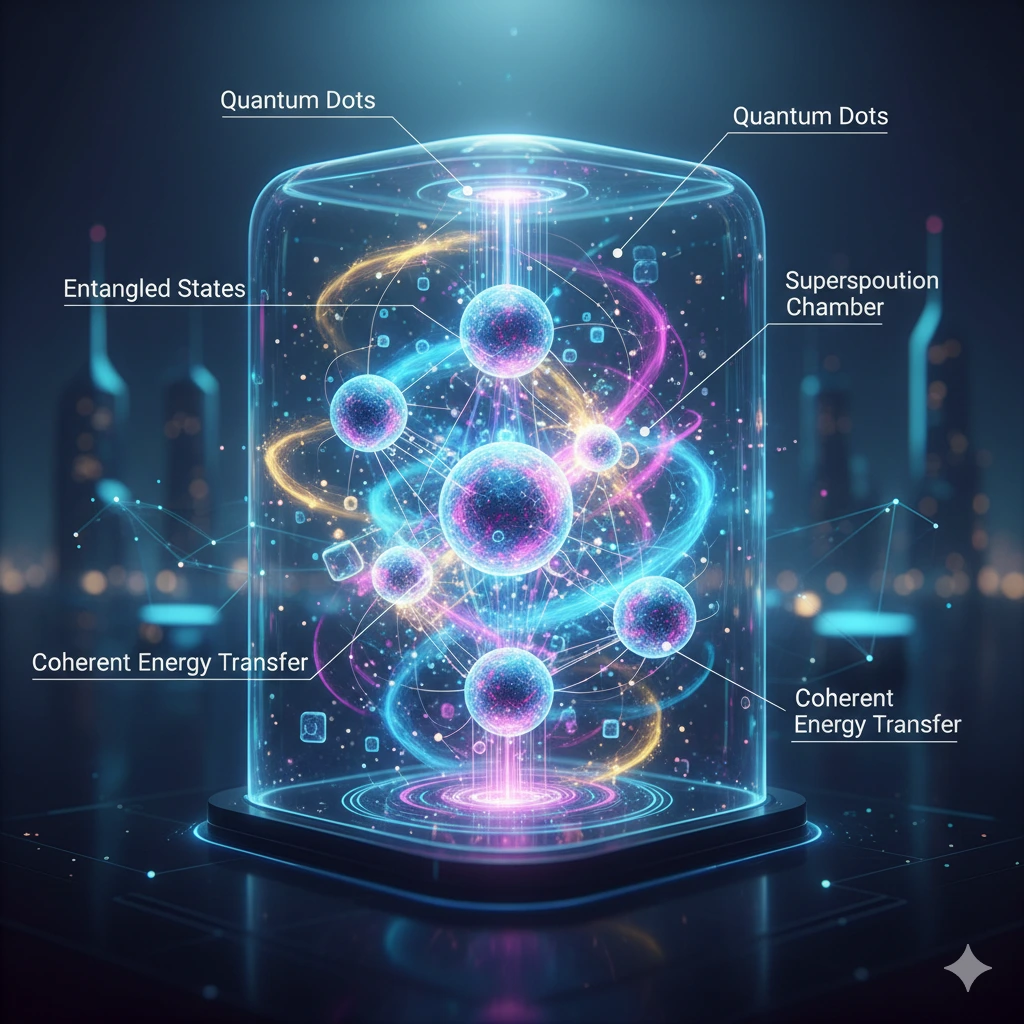
Emerging battery technologies focus on new ways of storing and generating electrical energy that go beyond traditional chemical reactions. Many of these concepts are still in experimental or early research stages, but they represent long-term shifts in how energy storage could work in the future.
These systems are not designed for everyday consumer devices yet. Their value lies in specialized applications, scientific research, and long-term innovation in energy generation and storage.
Key emerging technologies include:
- Nuclear batteries (betavoltaic), which use radioactive decay to generate electricity for extremely long-lasting, low-power applications such as space exploration and remote sensors
- Diamond batteries (carbon-14), designed to convert radioactive carbon decay into electricity, with potential lifespans measured in decades or longer
- Microbial fuel cells, which generate electricity using bacteria that break down organic matter, are mainly explored for wastewater treatment and environmental applications
- Enzymatic bio-batteries, which use biological enzymes to produce electricity from organic compounds
- Quantum batteries (theoretical), a research concept based on quantum physics that explores ultra-fast charging and energy transfer at the quantum level
These technologies are still far from mainstream use, but they highlight how energy storage research is expanding beyond traditional chemistry. They represent experimental paths that may one day influence medicine, space systems, environmental technology, and long-term energy infrastructure.
| Battery Type | Rechargeable | Energy Density | Lifespan | Cost | Safety | Typical Uses |
| Zinc-Based | ❌ No | Low | Short | Very Low | High | Remotes, clocks, hearing aids, basic electronics |
| Alkaline | ❌ No | Low–Medium | Medium | Low | High | Household devices, toys, flashlights |
| Lithium Primary | ❌ No | High | Long | Medium–High | High | Medical devices, sensors, military, cameras |
| Lead-Based | ✅ Yes | Low | Medium | Low | Medium | Cars, UPS systems, backup power, solar |
| Nickel-Based | ✅ Yes | Medium | Medium–Long | Medium | Medium | Tools, aviation, emergency systems |
| Lithium-Ion Family | ✅ Yes | Very High | Long | Medium–High | Medium | EVs, phones, laptops, power tools |
| Sodium-Based | ✅ Yes | Medium | Long | Low–Medium | High | Grid storage, industrial energy systems |
| Flow Batteries | ✅ Yes | Low | Very Long | High | Very High | Grid storage, renewable energy buffering |
| Specialized / Advanced Battery Types | ✅ Mostly | Very High | Long | High | Medium–High | Aerospace, wearables, defense, R&D |
| Experimental / Emerging Technologies | ⚠️ Varies | Potentially Extreme | Unknown | Very High | Unknown | Research, future tech, space, biotech |
| Battery Formats (Physical Types) | ⚠️ N/A | Depends on chemistry | Depends | Depends | Depends | All applications (consumer to industrial) |
What is the best battery?
There isn’t a single “best battery” for every situation. The best option always depends on how the battery is used, the power demand, climate conditions, charging habits, and how long you expect it to last. A battery that works well in a remote control won’t work in a car, and a battery built for solar storage won’t fit a phone or key fob.
In daily life, people usually search for “best battery” by use case, not by chemistry. That’s what actually matters in practice. Below, the focus is on common real-world applications, starting with one of the most searched categories.
Best car battery
The best car battery is the one that reliably starts your engine, supports your vehicle’s electronics, and lasts under your driving conditions. Modern vehicles demand more from batteries than older models, not just for ignition, but for onboard systems, sensors, infotainment, and safety features.
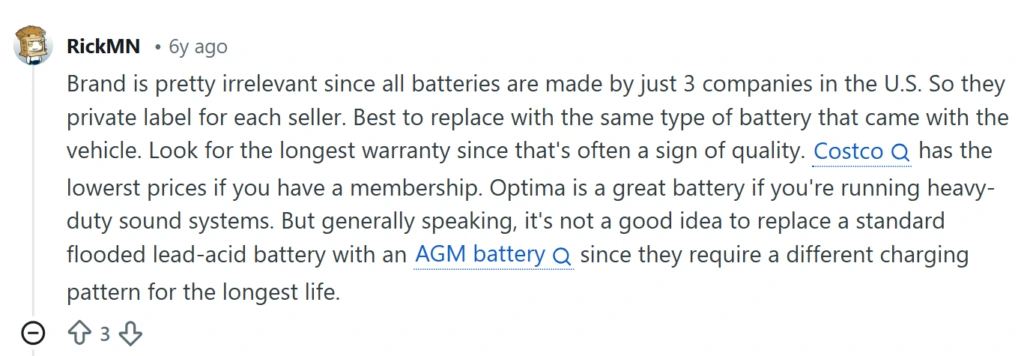
As a Reddit user points out,“brand is pretty irrelevant since all batteries are made by just 3 companies in the U.S. So they private label for each seller,” meaning the real differences come down to specs, warranty, and where you buy.
Now, a newer comment on another Reddit thread does not recommend Optima:
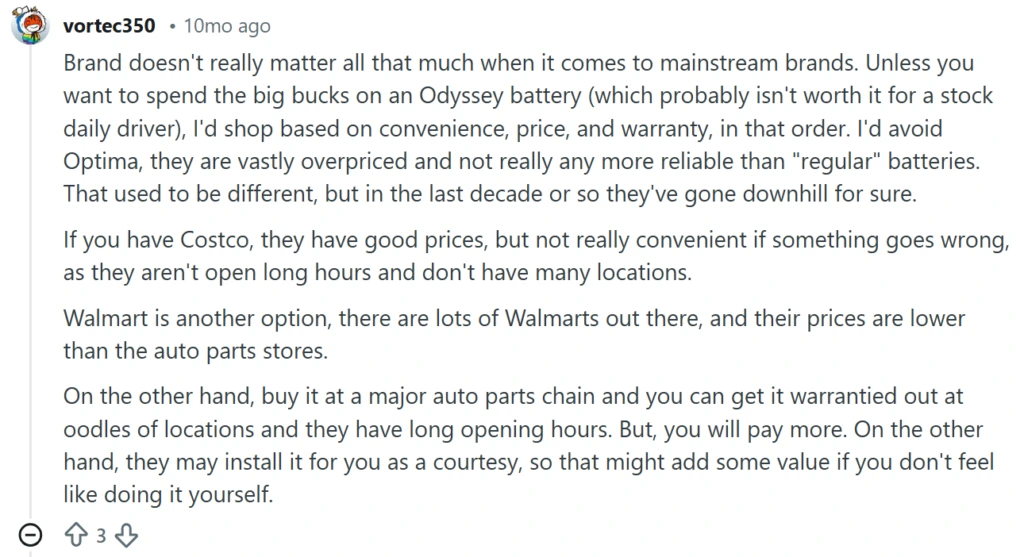
Among popular brands, Motorcraft and Costco’s house brand consistently earn praise for longevity and warranty support. Optima remains well-regarded for demanding applications, though quality has reportedly declined since moving production to Mexico. Budget options like Walmart’s Everstart draw mixed opinions at best.
One rule everyone agrees on: match your replacement to your car’s original battery type. Swapping a conventional battery for an AGM can damage your charging system over time.
The smartest move? Prioritize warranty length, buy from a retailer with easy returns, and when in doubt, go OEM.
Best portable battery chargers
The portable charger market is crowded, and community opinions are sharply divided. Baseus and UGreen are consistently praised as reliable picks, with Reddit users noting that “pretty much anything by Anker or Baseus will be pretty good.”

Anker, once the undisputed community favorite, has taken a serious hit to its reputation after multiple product recalls for fire and burn hazards — with users asking, “Why are people recommending Anker when they’ve had so many recalls?”
Beyond brand, savvy buyers focus on specs: look for USB-C charging, at least 20,000mAh capacity, and keep it under 100Wh if you travel by air. Safety certifications (UL, CE) matter more than marketing claims.
INIU earns praise for compact, travel-friendly designs, while Nightcore is gaining a quiet following among power users.
Bottom line: prioritize certifications and specs over brand loyalty.
Best battery life laptops
When it comes to real-world battery life, the Reddit community speaks with one voice: Apple’s M-series MacBooks sit in a class of their own. As a user puts it, “Apple Silicon M-series chips are #1 for battery life in actual usage.” Reports of the MacBook Air M4 lasting 17 hours are common, making it the go-to recommendation for students and professionals alike.

That said, there’s an important caveat. Another Reddit comment warns that “even the latest MacBook will die after 3 hours if you run video rendering on it” — advertised battery life means very little without knowing your workload.
For Windows users, Lenovo’s Lunar Lake-powered models (like the Aura Edition) are earning praise as a credible alternative, with people calling the battery life “excellent.”
Bottom line: for all-day battery, the MacBook Air M4 is the clear favorite — just match the laptop to your actual workload.
Best battery life phones
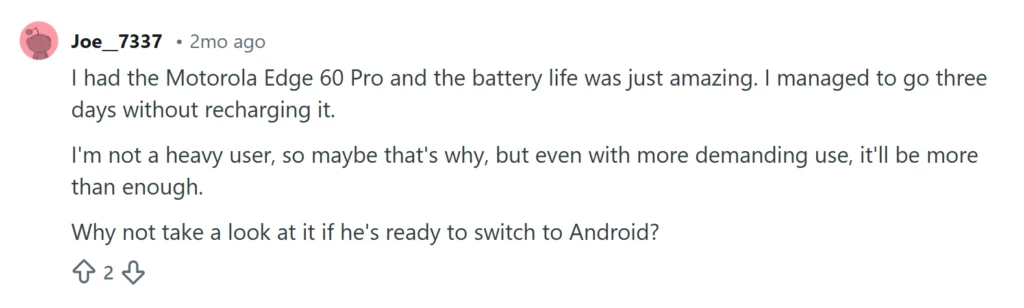
The phone battery debate splits cleanly along two lines: Android users swearing by their endurance, and iPhone users quietly suffering. The thread’s clearest takeaway is that Android — particularly Motorola and OnePlus — dominates on battery life. A Reddit user reports going three days without charging on a Motorola Edge 60 Pro, while another calls the OnePlus 13 and 15 “incredible” for battery.
OPPO also earns strong praise, with people noting the OPPO Find X9 ends the day above 50% while an iPhone 16 Pro is nearly dead.
On the flip side, the OnePlus 15 disappointed at least one user, and iPhones, particularly older models, take consistent heat for poor longevity.

For maximum capacity, niche brands like DOOGEE offer multi-day battery life, though carrier compatibility can be an issue.
Bottom line: for all-day battery, Android wins — Motorola and OnePlus lead the pack.
Best home EV charger
The r/evcharging community has a clear favorite: Emporia. People consistently praise its reliability, with one user reporting, “I’ve had my Emporia almost three years, and there haven’t been any problems.” Others highlight its app and customer support as standouts for the price.

Wallbox earns strong marks among home automation enthusiasts, with people choosing it specifically because it “supports OCPP” — a key feature for smart home integration. It’s also praised for its compact, weather-resistant design, though it runs pricier than Emporia.
ChargePoint wins on future-proofing. As one commenter put it, it’s “the only EVSE with a user-purchasable and replaceable cable” — a practical advantage as plug standards evolve.
Tesla’s Universal Wall Connector gets consistent nods, though at least one person skipped it over, due to reluctance to support the brand.
How does the HCS-50 by Convert Solarcompare? For homeowners in Virginia Beach looking for a professionally installed, all-in-one solution, the HCS-50 is worth serious consideration. It delivers 9.6 kW at 40A — adding up to 38 miles of range per hour — with a 25 ft cable, NEMA 4 weather-sealed enclosure, and ETL/ENERGY STAR certifications. Installation is included starting at $2,000, and Convert Solar handles permits and inspections.
Bottom line: Emporia for value, Wallbox for smart home integration, ChargePoint for future-proofing — and the HCS-50 for a professionally installed, weather-ready solution in the Virginia Beach area.
Relating batteries to solar energy
Batteries play a central role in how solar energy actually works in real life. Solar panels don’t store power. They generate electricity only when sunlight hits them. A battery is what turns solar power into usable energy at night, during cloudy days, or during grid outages.
Without a battery, a solar system is limited to daytime production and grid dependency. With a battery, solar becomes a true energy system, not just an energy source.
Here’s how the relationship works in practical terms:
- During the day, solar panels produce electricity. Your home uses what it needs first.
- Excess energy flows into the battery instead of being sent to the grid.
- When production stops (night, storms, outages), the battery supplies stored power to your home.
This changes how you use energy. Instead of consuming electricity only when it’s produced, you gain control over when and how that energy is used.
For homeowners, this creates three major benefits:
- Energy independence: A battery reduces reliance on the grid. You’re not fully dependent on utility availability or peak pricing windows.
- Backup power: When outages happen, a solar battery can keep essential systems running, such as refrigeration, lighting, internet, and medical equipment.
- Energy management: Stored energy can be used strategically during peak-rate hours, improving long-term cost efficiency depending on your utility structure.
From a system perspective, solar batteries are not just storage devices. They are energy management tools. They control the flow, timing, and availability of power inside your home.
This is why battery choice matters in solar systems more than in almost any other application. Capacity, safety, depth of discharge, cycle life, and integration with inverters all affect how reliable the system becomes. A solar setup without the right battery design can produce power, but it won’t deliver energy security.
FAQs
How to charge a car battery?
You can charge a car battery using a dedicated battery charger connected to a standard power outlet. The charger clamps attach to the battery terminals, and the charging process slowly restores stored energy. In everyday use, most car batteries recharge automatically while driving, through the alternator. If a battery is fully drained, external charging is usually needed before the vehicle will start again. Slow charging is generally safer and better for battery health than rapid charging.
How long does a car battery last?
Most car batteries last between 3 to 5 years under normal conditions. Actual lifespan depends on climate, driving habits, electrical load, and battery type. Hot climates tend to shorten battery life, while frequent short trips can prevent full recharging, which also reduces longevity. AGM batteries often last longer than standard lead-acid batteries, especially in vehicles with start-stop systems.
Why won’t my phone battery charge?
Common reasons include:
- A damaged charging cable
- A dirty charging port
- A faulty adapter
- Or battery degradation
Software issues can also interfere with charging.
Over time, lithium batteries lose capacity and charging efficiency, which can make charging slower or inconsistent. If cleaning the port and changing the cable doesn’t help, the battery itself may be nearing the end of its usable life.
How to discard a battery?
Batteries should never be thrown in regular household trash. Many contain chemicals and metals that can harm the environment and create fire risks. The correct method is to take them to a battery recycling center, electronics recycling facility, or a designated drop-off location at retail stores and waste management centers. Proper disposal protects the environment and supports material recovery.
How to clean battery corrosion?
Battery corrosion usually appears as a white or bluish powder around the terminals. To clean it safely…
- Disconnect the battery first
- Use a mixture of baking soda and water, and apply it to the corroded areas
- Gently scrub with a brush
- Wipe clean with a dry cloth
- Make sure the terminals are fully dry before reconnecting.
Protective gloves and eye protection are recommended for safety.
Power your decisions with confidence
Batteries are more than simple power sources. They are energy systems that store, convert, and deliver electricity across nearly every part of daily life, from phones and laptops to cars, homes, and solar systems. Understanding how batteries work, the differences between battery types, and how each chemistry is designed for specific uses helps you make better decisions, not just replacements.
This guide covered what a battery is, how it converts chemical energy into electrical power, the main battery categories, and how different technologies serve different needs. It also connected batteries to solar energy, showing how storage transforms solar from a daytime power source into a full energy system that supports independence, resilience, and control.
Whether you’re choosing a battery for transportation, personal devices, or renewable energy storage, the right choice comes from understanding function, not marketing labels.
If you are thinking about long-term energy reliability, resilience, and independence, the next step is understanding how solar fits into that picture. Learn how solar power systems work, what they actually change in your energy usage, and how storage transforms solar into a complete home energy solution.